ABHL and ASHAL Founder and President Anapuena Havena Named Finalist in Best Writer Category at the Best of Brazil Global Awards
The recognition highlights Havena’s work as a Brazilian writer, historian, genealogist, and cultural leader in the United States, as well as her mission to promote knowledge, memory, literature, and cultural exchange through ASHAL.
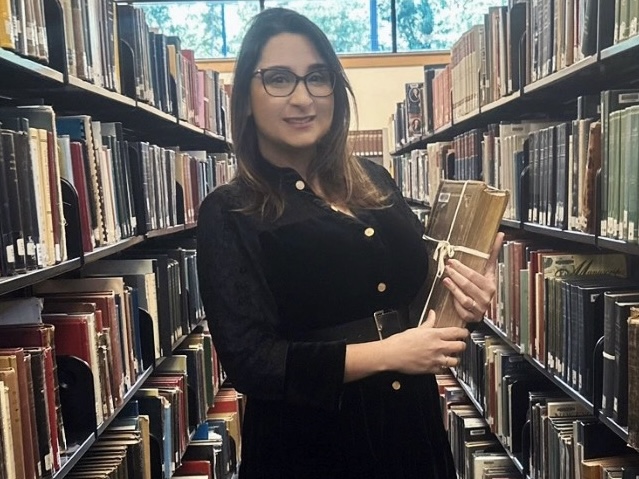
Anapuena Havena, founder and president of Academia Brasileira de História e Literatura — ABHL (the Brazilian Academy of History and Literature) and The American Society of History, Arts and Letters (ASHAL), has been named a finalist in the Best Writer category at the Best of Brazil Global Awards — Melhor do Brasil no Mundo. The award recognizes Brazilians who have distinguished themselves abroad through their work, talent, leadership, and contributions to society.
The awards gala is scheduled for September 12, 2026, at the Statue of Liberty Museum on Liberty Island in New York, where the winners will be announced. The evening will also mark the first time the venue hosts an event dedicated to the Brazilian community. Model and entrepreneur Luiza Brunet serves as the event’s official ambassador. The award was created by producer Rafael dos Santos.
This is the second time Havena has advanced to the final stage of the award. In a previous edition, the ceremony was held at the Palace of Westminster in London.
Born in Ceará, Brazil, and currently residing in the United States, Havena is a writer, historian, genealogist, researcher, and cultural advocate. She is the founder and president of both the Academia Brasileira de História e Literatura — ABHL (the Brazilian Academy of History and Literature) and The American Society of History, Arts and Letters (ASHAL).
Founded in the United States, ASHAL was created to encourage cultural and intellectual exchange among writers, historians, artists, educators, researchers, and scholars from different fields and backgrounds. Through the institution, Havena promotes research, writing, publication, and dialogue as essential ways to preserve cultural memory and make knowledge more accessible to broader audiences.
For Anapuena Havena, ASHAL is part of a larger mission: to connect intellectual and cultural voices across countries, languages, and disciplines. The institution brings together people committed to literature, history, the arts, education, heritage, and the circulation of ideas, creating space for collaboration and meaningful cultural exchange.
Her work through ASHAL also reflects her role as a Brazilian cultural leader in the United States. From this position, Anapuena Havena has sought to strengthen ties between Brazil, the United States, and international communities, encouraging intellectual production that can travel beyond local borders while remaining rooted in identity, memory, and cultural heritage.
ABHL, founded in Brazil, brings together writers, historians, researchers, professors, artists, and intellectuals from different regions of Brazil and abroad. Its work focuses on preserving memory, promoting Brazilian literature, and supporting intellectual and cultural production. Together, ABHL and ASHAL represent Anapuena’s commitment to expanding the reach of history, literature, arts, and cultural heritage beyond geographic and linguistic boundaries.
Anapuena’s literary journey began in 2014, when her eldest son — then eight years old and an avid reader — said he had no new books to read. In response, she picked up pen and paper and wrote, by hand, O Príncipe que Não Sabia Brincar. That moment led to her first book and marked the beginning of her literary career.
Since then, she has published works in several genres, including historical fiction, children’s and young adult literature, chronicles, poetry, short stories, scholarly articles, and cultural essays. Among her titles is Encantos do Café, a historical novel set during Brazil’s coffee cycle.
She is also the author of A Leitora do Tempo, a series of chronicles inspired by nineteenth-century newspapers, documents, and historical records. The project transforms archival research into accessible narrative, recreating the customs, settings, and daily life of Imperial Brazil. By presenting historical sources through literary language, Havena invites readers to encounter the past not only as information, but as memory, identity, and human experience. Her next novel, O Último Baile, is currently in its final stages.
As a writer and historian, Anapuena Havena uses literature as a path to bring historical and cultural knowledge closer to the public. Her work is guided by the belief that literature can reach people emotionally and intellectually, opening doors to history, heritage, and reflection in ways that academic language alone often cannot.
In 2017, inspired by the historical universe of Encantos do Café, Havena founded, alongside her husband, Lincoln Chaves, a historical and cultural center that included a coffeehouse, restaurant, gallery, bookstore, library, and a regular program of lectures, book launches, storytelling events, and free classes. The initiative was created to enrich the intellectual and cultural life of the community and later gave rise to the Academia Brasileira de História e Literatura (ABHL).
Through ABHL and ASHAL, Anapuena Havena develops editorial projects, literary anthologies, study programs, and cultural initiatives. Among them are the Study Program on Brazil’s Tangible Cultural Heritage and the anthology Pequenas Eternidades, a literary collection dedicated to preserving personal memories through literature.
She is also the organizer and co-author of Aconteceu no Brasil Imperial, a book that brings together studies, essays, and literary works by contemporary authors on the Brazilian Imperial period.
In historical and genealogical research, Havena leads the project Desbravando o Sertão Central Cearense, dedicated to documentary research on the origins of Ceará’s Sertão Central region and the reconstruction of family histories from the interior of the state. Recently, she identified the founder of a chapel of historical and cultural significance in the municipality of Banabuiú, helping restore that memory to the local historical record.
For Anapuena Havena, research, genealogy, and literature are deeply connected. By studying documents, family roots, and the memory of Brazil and Ceará’s Sertão Central region, she transforms identity, ancestry, and historical experience into literary and cultural work. As a historian, she sees literature as a bridge between academic knowledge and the general public.
Although born in Fortaleza, Anapuena Havena grew up in Ceará’s Sertão Central region and regards Quixadá as the city closest to her heart. With family roots connected to Banabuiú, Quixadá, and Quixeramobim, she proudly carries the cultural identity of Ceará’s interior.
A mother of three children, Anapuena Havena sees literature, education, and the preservation of memory as ways to build a legacy for future generations. Her children already follow in their mother’s footsteps, writing and illustrating their own stories.
“Bringing Brazil’s literature, history, and culture from Quixadá to the Statue of Liberty is a source of pride and gratitude,” said Anapuena Havena.
With published books, widely circulated texts, active institutions in Brazil and the United States, and a growing body of cultural and historical work, Anapuena Havena continues to build a career dedicated to promoting Brazilian literature, history, memory, and cultural heritage internationally.